Process Overview – Glass Etching of Colorado Springs
We use a professional sandblasting process, not chemical etching or laser marking. This allows for deeper, more consistent, and longer-lasting results—especially on architectural glass like shower doors and panels.
1. Design & Layout
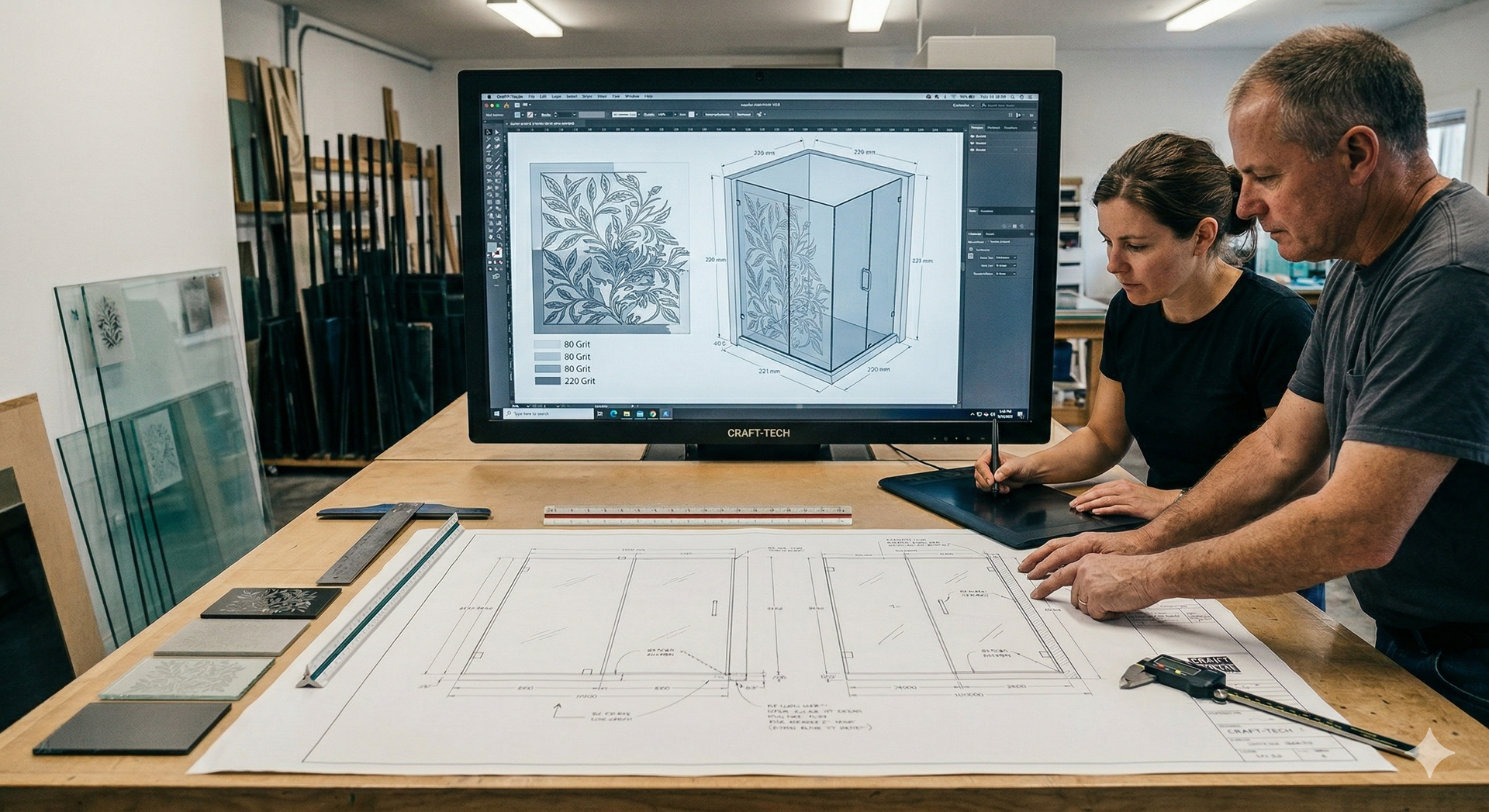
Each project starts with a custom digital design. We size and scale the artwork to fit the exact glass dimensions, ensuring proper alignment across panels, doors, and returns.
2. Resist Film Application
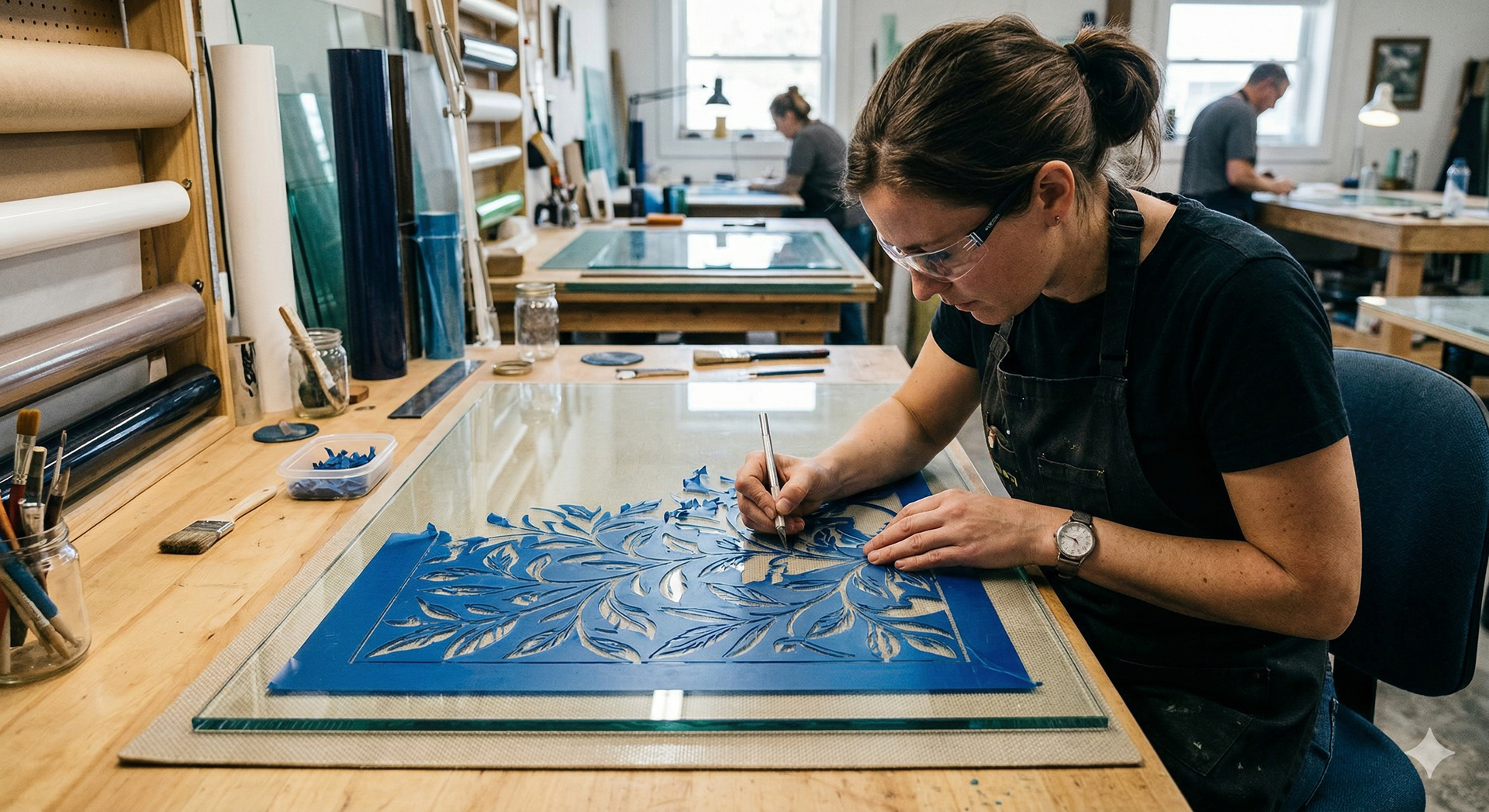
We apply a specialty resist film (stencil material) to the glass surface.
The design is cut into the film, and then hand-weeded—removing only the areas that will be etched. This step is labor-intensive and critical for clean, sharp lines.
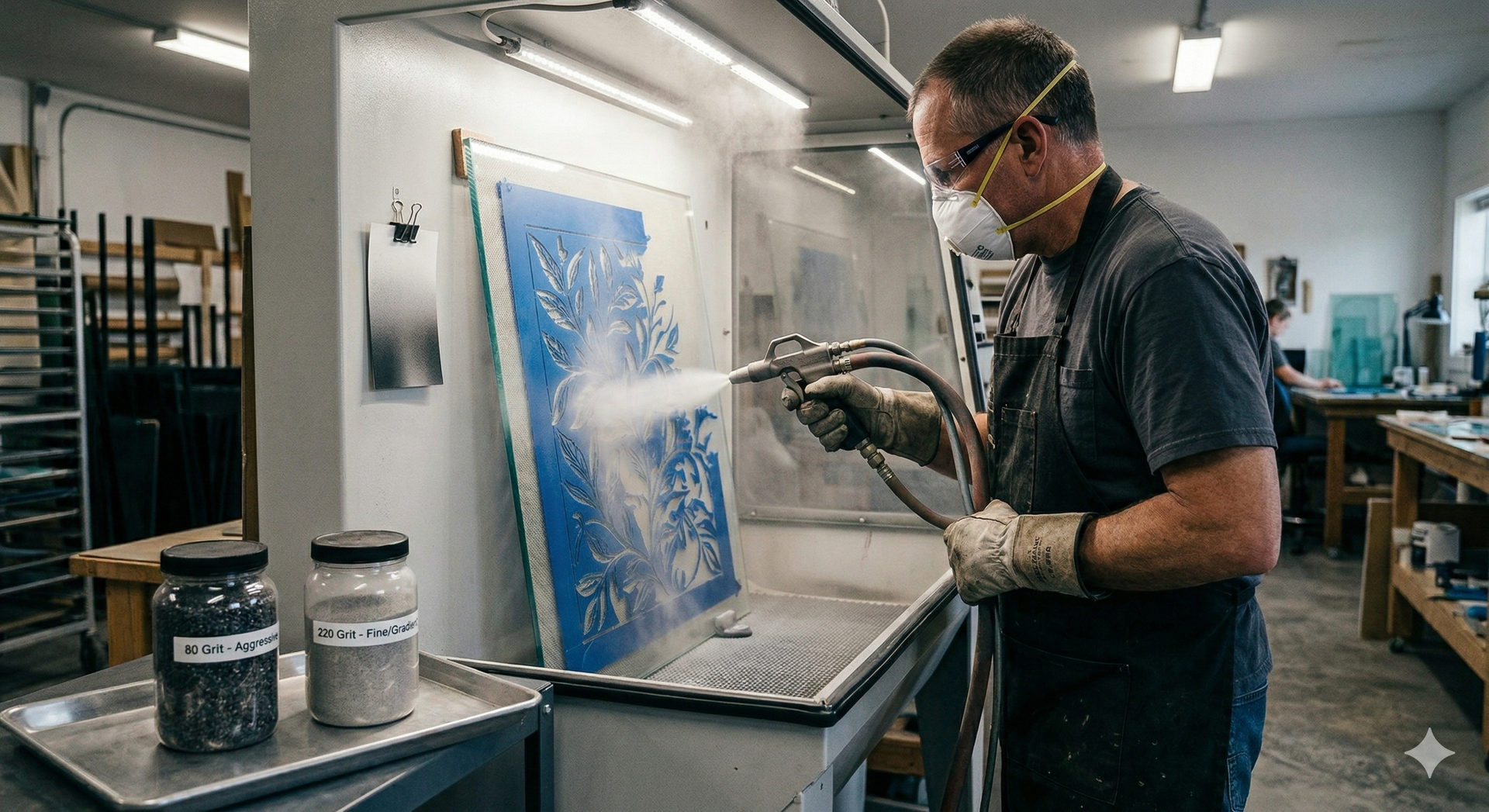
3. Sandblasting (Mechanical Etching)
We etch the exposed glass using aluminum oxide abrasive media, typically ranging from:
- 80 grit (deeper, more aggressive cuts)
- up to 220 grit (finer, softer finishes and gradients)
This is a controlled mechanical process, not acid-based, which allows us to:
- Create depth and texture
- Produce fade/gradient effects
- Maintain consistent quality across large panels
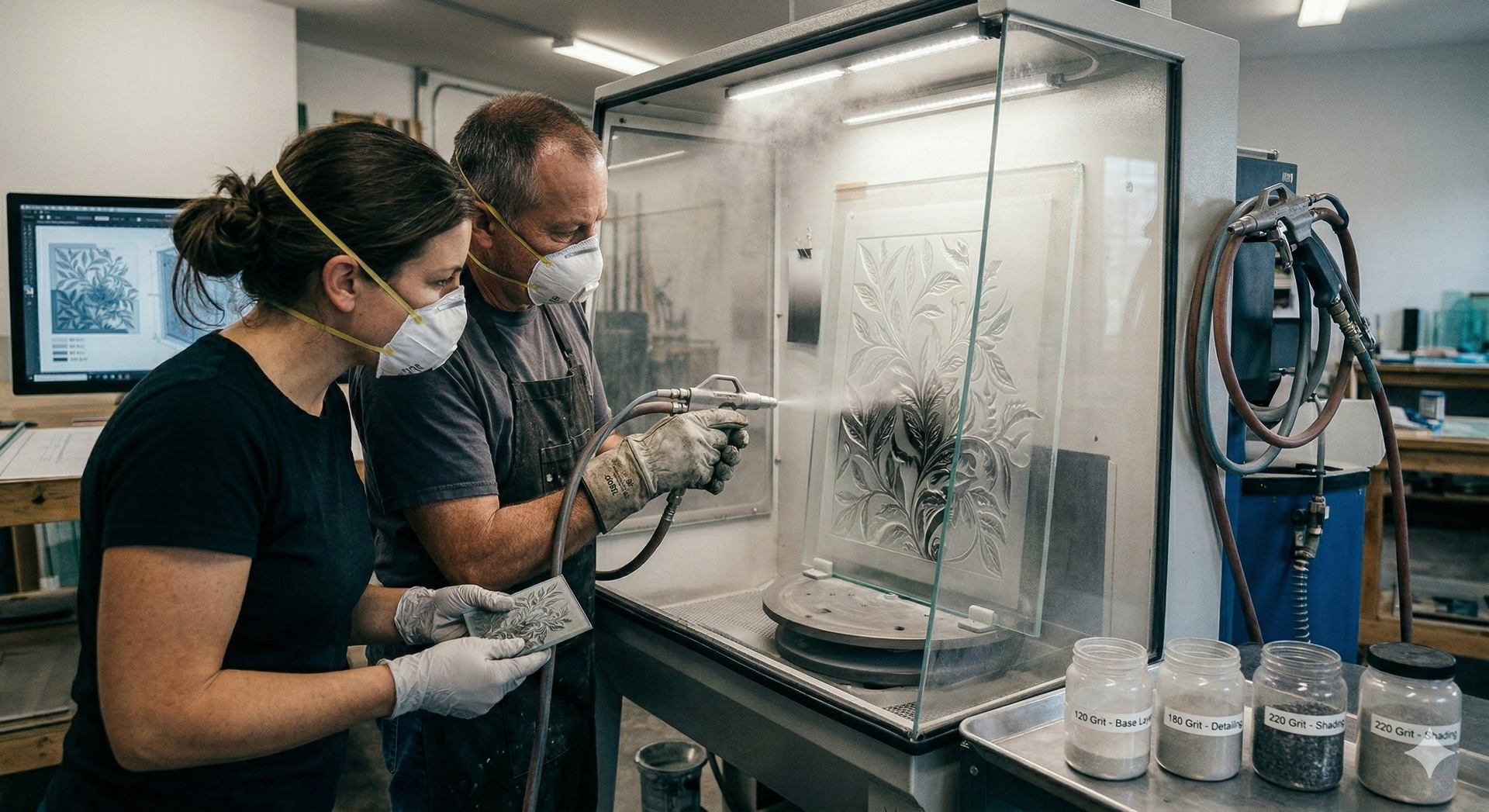
4. Multi-Stage Etching (if applicable)
For higher-end designs, we use layered blasting techniques to create different depths and shading. This gives a more dimensional, custom look compared to flat etching.
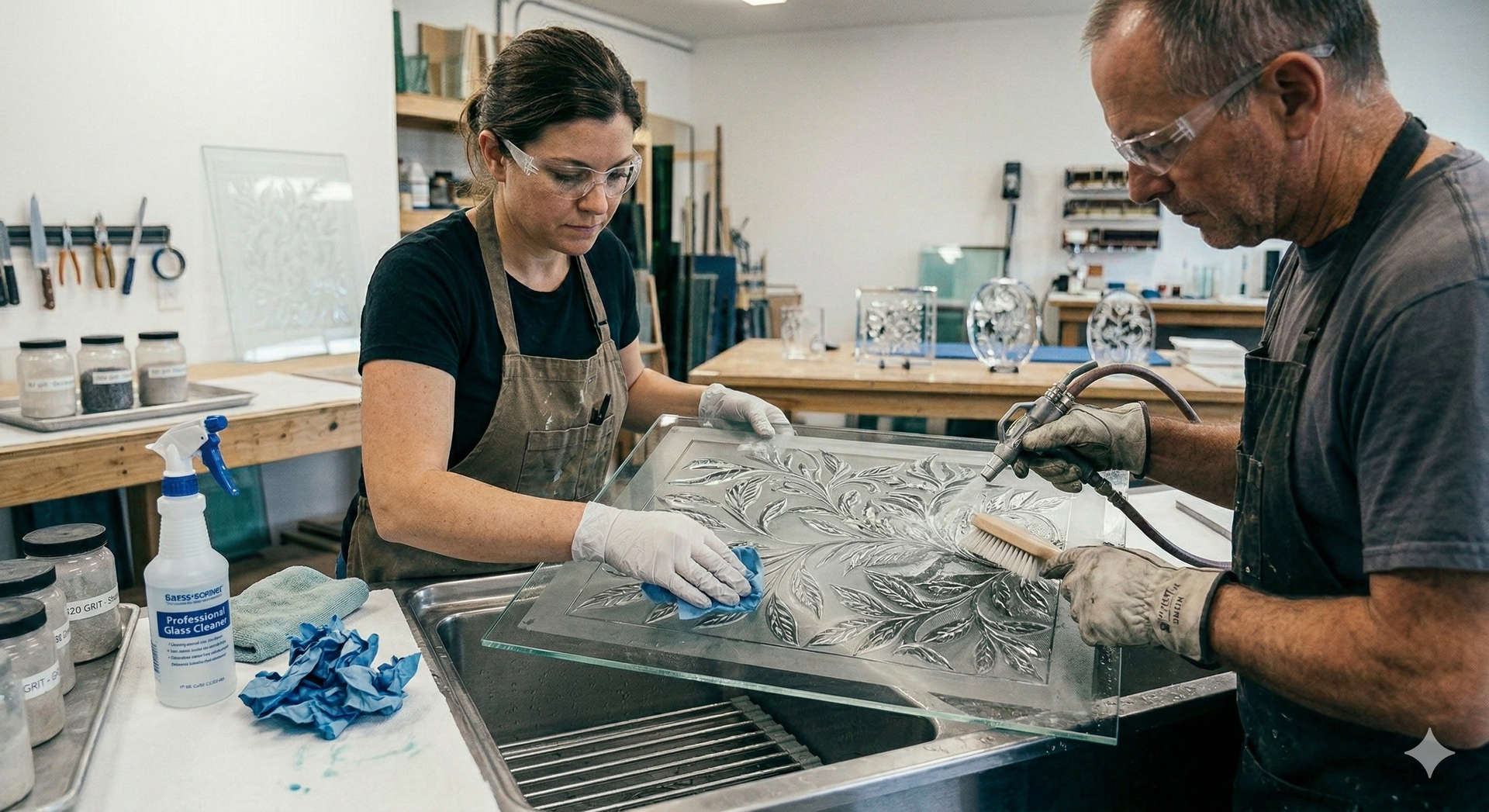
5. Cleaning & Finishing
After blasting, the resist is removed and the glass is thoroughly cleaned.
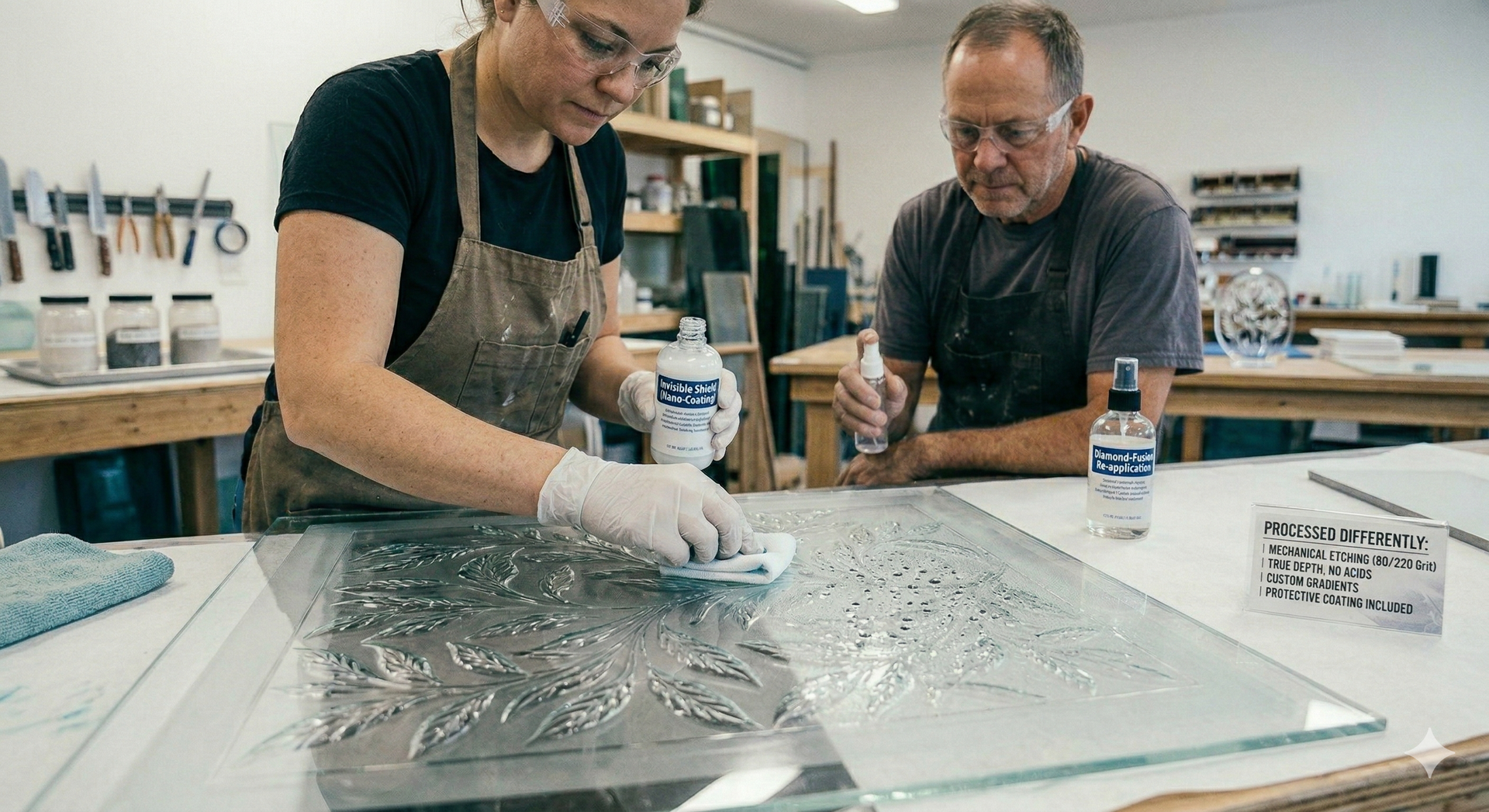
6. Protective Coating (Value Add)
We apply a protective coating such as:
- Invisible Shield (nano-coating) or
- Diamond-Fusion re-application (when applicable)
This step:
- Repels water, soap scum, and minerals
- Makes cleaning significantly easier
- Helps protect the etched surface long-term
Why Our Process is Different
- No acids or chemicals (safer, more controlled, better finish)
- True etched depth, not surface marking
- Custom gradients and multi-depth designs
- Protective coating included for longevity and performance